Home Back The Doi Ceremony: A Practice of Black Magic for Warding off Harassment among Southern Communities.
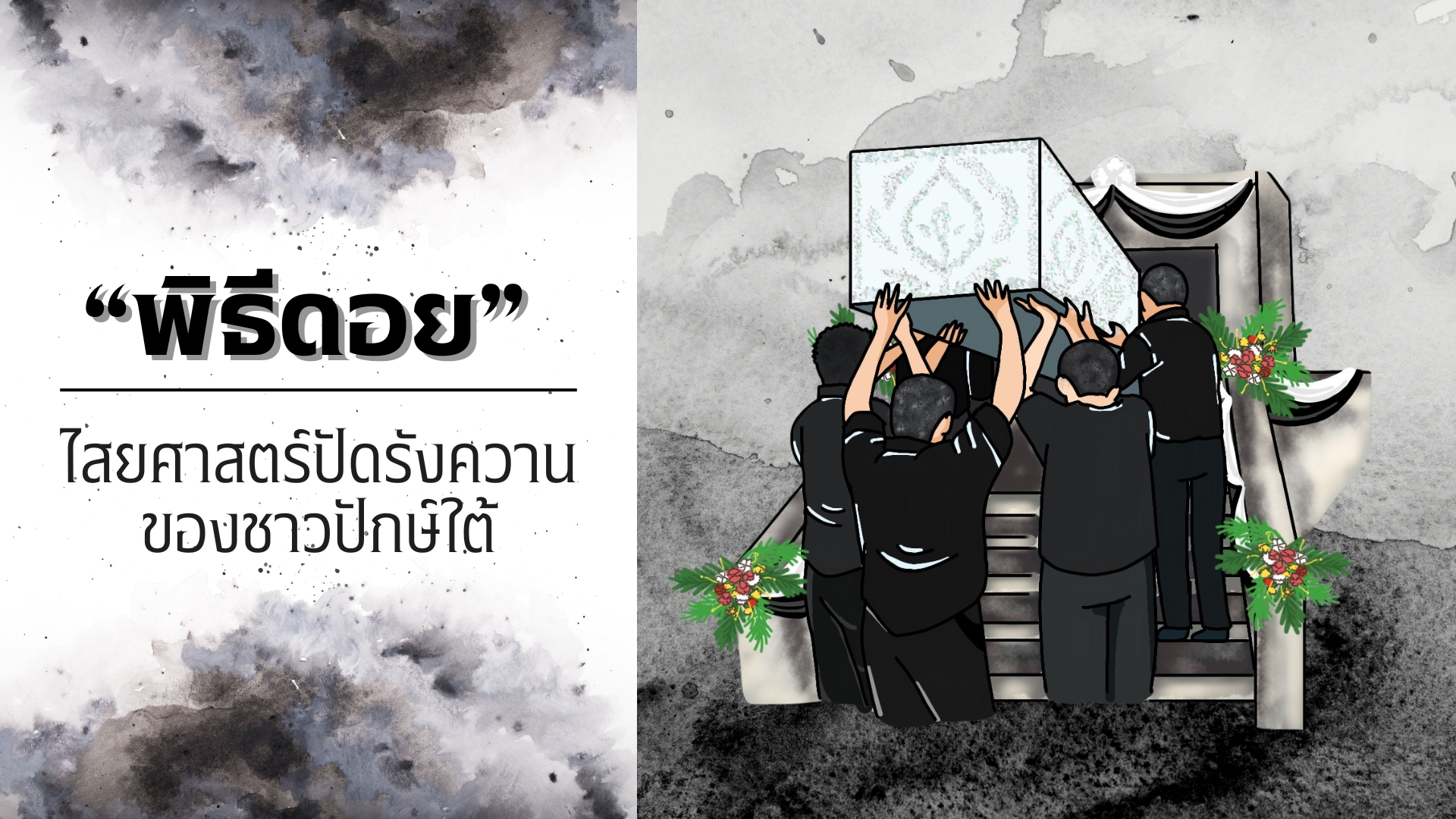
The Doi Ceremony: A Practice of Black Magic for
Warding off Harassment among Southern Communities.
Suteera Boontum1
"Death" is universally recognized as the most irreversible method of severing ties with individuals in the world. Even within familial bonds, death is regarded as a tragic event that no one desires. However, in the realm of beliefs, deceased individuals are perceived as spirits capable of both benefiting and causing harm to the living. Hence, the ritual of "dispelling harassment," also known as the "Doi Ceremony," emerges from the fear of the afterlife. It is believed that conducting such a ceremony enables the bereaved family to resume their lives in tranquility, free from the disturbances caused by malevolent spirits.
What is a Doi Ceremony?
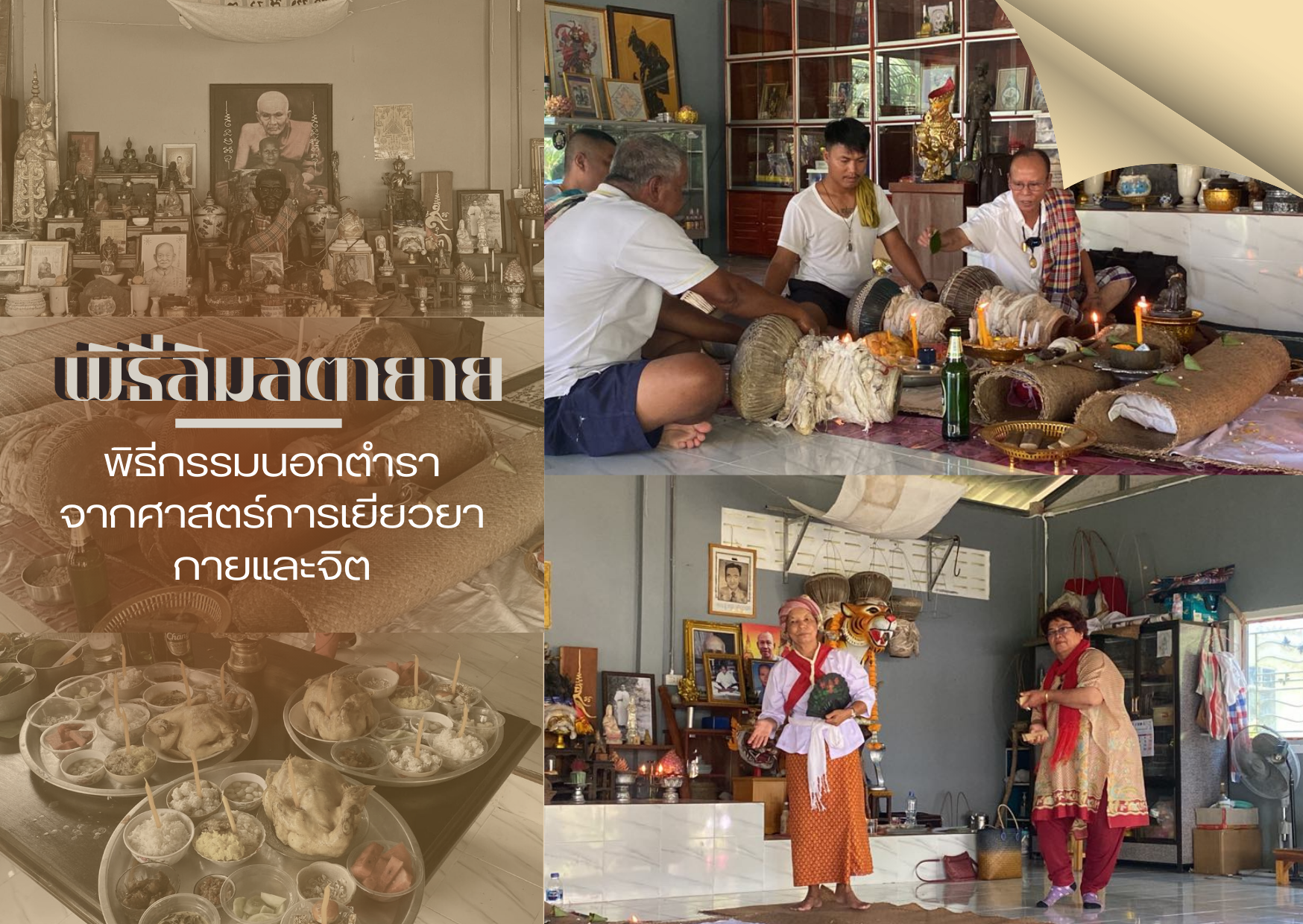
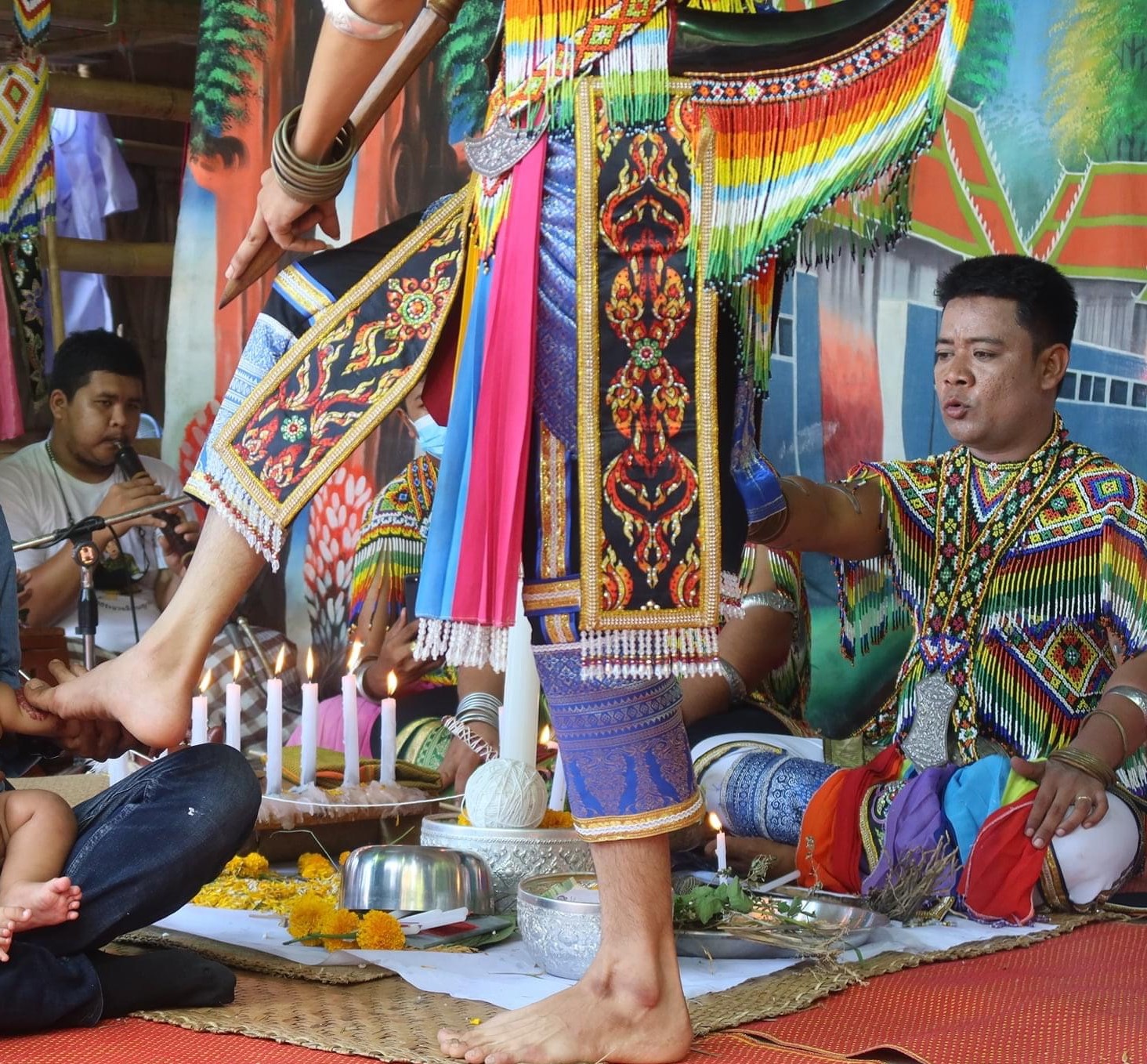
In Southern Thailand, the Doi Ceremony has long been practiced as a means to protect the bereaved family from spiritual harassment. During this ceremony, a practitioner known as the
“Mo Doi”, who is endowed with knowledge of black magic, conducts a series of rituals to expel malevolent spirits from the departed. When the death is considered ordinary, the Mo Doi sprinkles holy water upon the corpse and performs the ceremony with a carefree manner because these spirits are believed to lack power or ill intent. However, in cases of unusual deaths, such as accidents or deaths during pregnancy, the Mo Doi employs their extensive expertise to eradicate evil forces. They proceed with utmost caution, avoiding any missteps. The rationale behind this vigilance lies in the belief that those who die under abnormal circumstances transform into malevolent spirits—a threat not only to the deceased’s family but also to the Mo Doi himself performing the sacred task.
Doi ceremony and religious beliefs
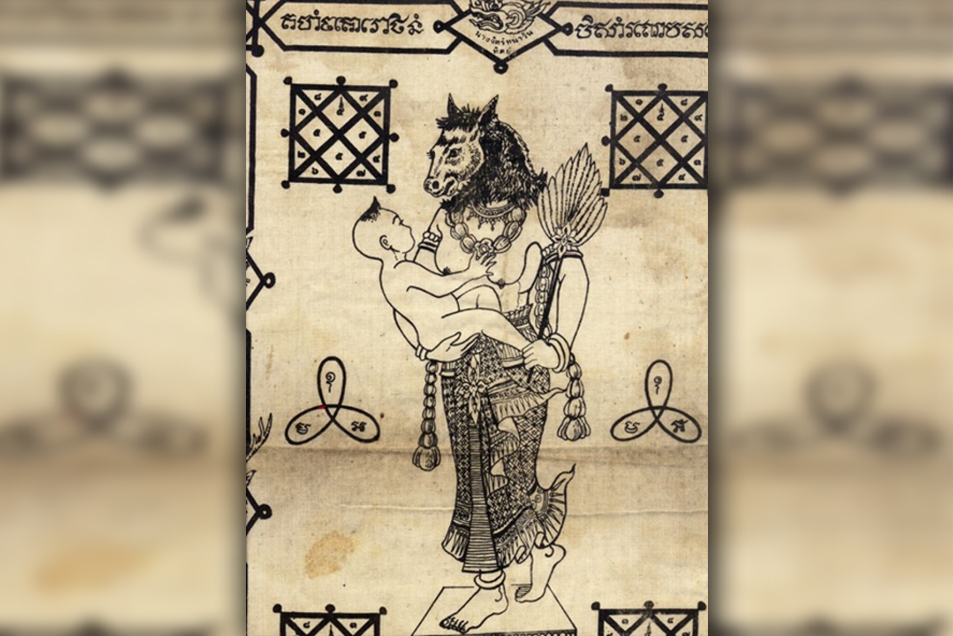
The Doi Ceremony is a means to ward off harassment, imbued with Buddhist teachings aimed at reminding relatives or participants not to be incautious and understand the inevitability of death. Commencing the ceremony involves using holy water to sprinkle on the deceased and around the household. Chants are recited to invoke the presence of the Buddha, Dhamma, and Sangha, who are sought as refuge throughout the proceedings. The culmination involves reciting prayers to command or deter malevolent spirits inhabiting the deceased. Mo Doi will recite the following mantra:
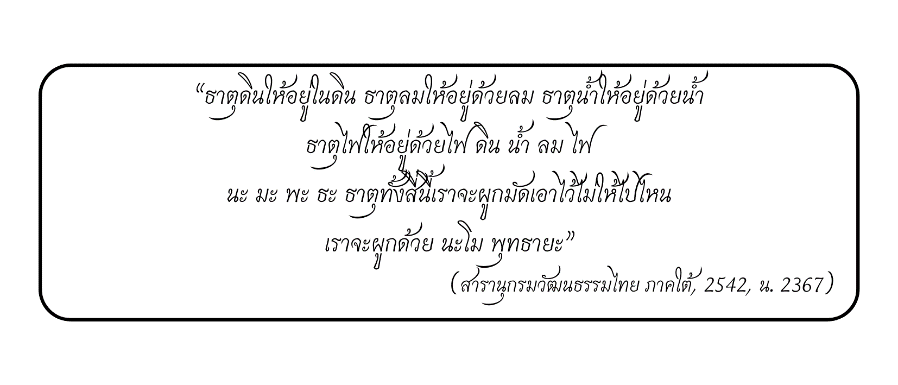
Photo by Encyclopedia of Thai Culture, Southern Region, Volume 5. (1999). Doi: Ritual. (p. 2367). Thai Encyclopedia Foundation Siam Commercial Bank. Bangkok
In the provided statement, the purpose is to prevent evil spirits from manifesting and causing disturbance by restoring the four elements within the body to their natural state and restricting their mobility entirely. While binding the corpse, Mo Doi recites the words: “Namo Buddhaya,” which is translated to “May humility be to the Buddha.” This mantra is believed to possess the ability to safeguard against ghosts and all forms of danger according to Brahman religious beliefs.
Beliefs and Practices of each province in Southern Thailand
The Doi Ceremony, while sharing core elements, exhibits regional variations across Thailand. It generally follows a structure that incorporates both spiritual beliefs and traditional religious practices. Some areas, like Songkhla Province, may have distinct rituals influenced by their cultural heritage and historical development (Songkhla Province, 1999, pp. 214-215). Before initiating the Doi Ceremony in Songkhla Province, relatives light a candle weighing 15 grams, equipped with seven wicks. This candle is maintained until it burns out entirely, signifying the completion of mourning for the deceased. Following this, individuals knowledgeable in black magic consecrate holy water on the corpse, preventing the spirit from transforming into a malevolent entity and returning to haunt the living. These rituals are deeply ingrained in the local culture and are believed to provide spiritual protection for both the deceased and the bereaved.
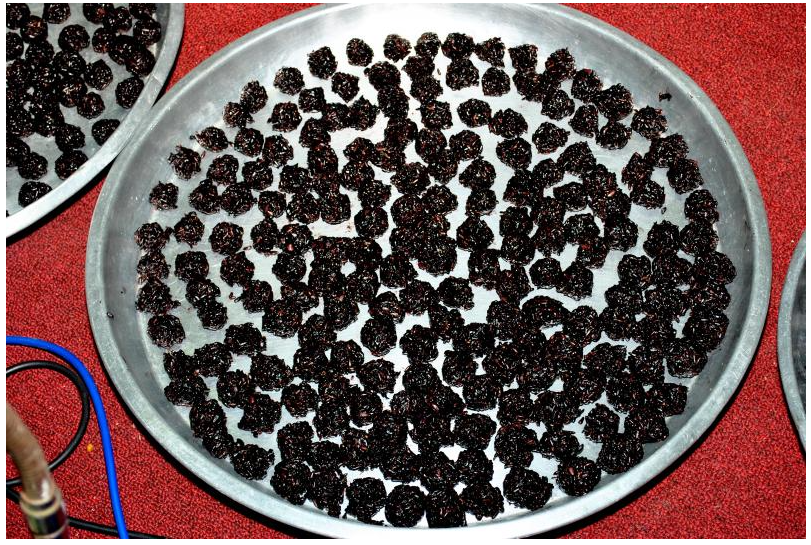
Furthermore, in certain regions, the practice involves using lukphan (a kind of plant found in Southern Thailand) for bathing rituals, positioning them alongside the deceased. This custom symbolizes the enigmatic truth that regardless of the pace or path of one's life journey, all individuals inevitably share the same destination; death. Regardless of wealth, poverty, or social status, the eventual outcome remains consistent - the physical body succumbs to decay, leaving behind only the residue of accumulated good and bad karma. This essence accompanies the soul into the next realm, as elucidated in a poetic verse from Nai Liap Praphan's book of Dhamma answers:
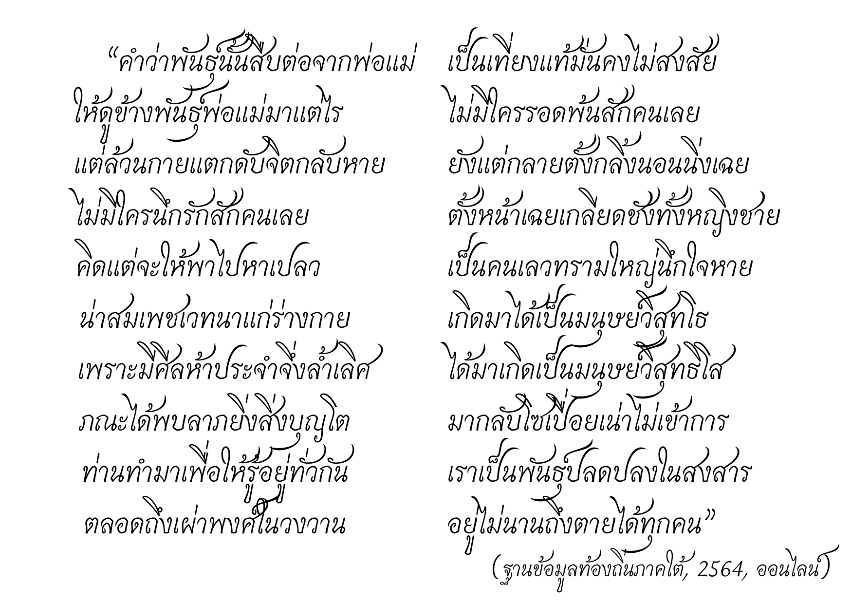
Photo by Southern Local Database. (2021). Death. Retrieved on 10 December 2023 https://clib.psu.ac.th/southerninfo/content/1/b12980ad
Although the Doi Ceremony may no longer be a common sight today, its essence enlightens a fundamental truth about life. It is a reminder of one’s life cycle encompassing birth, aging, sickness, and ultimately death. These aspects are like shadows that align with us throughout our journey. The ceremony highlights the importance of mindfulness, urging us not to be complacent but to actively strive to accumulate good deeds. Finally, what we carry with us to the next world is not money or fame, but the merit that we created while we were still breathing.
1An Applied Thai Program student, Faculty of Liberal Arts, PSU (cooperative education at the Self-Access Learning Center)
Southern Local Database (2021). Death. Retrieved December 10, 2023, from https://clib.psu.ac.th/southerninfo/content/1/b12980ad
Damrongpan Jaihaowiraphong. (2019). Changing the identity of "ghost burners" under the context of modernity in Southern Thailand. Doctoral degree thesis Prince of Songkla University.
Preecha Nunsuk. Doi: Ritual. Encyclopedia of Thai Culture, Southern Region, Volume 5. (1999). Pages 2366-2367.
Fine Arts Department. (1999). Doi Ceremony: Culture, historical development, identity and wisdom, Songkhla Province.
Share 5516 view

 ภาพฟรี.png)
.jpg)
.png)